Reliability, not just connectivity
A simple API call is quick. But what happens when the other side doesn’t respond? When data is malformed? When a system is down for maintenance? We build integrations that cope when things don’t go to plan.

Opus Online, a software development company in Tallinn, Estonia, connects e-commerce platforms, CRMs, ERPs, payment providers and any other systems so that data flows correctly, on time and without manual work. We build integrations that handle failures, deal with different formats and run reliably for years.
Let’s talk about which systems in your business should be talking to each other.
A simple API call is quick. But what happens when the other side doesn’t respond? When data is malformed? When a system is down for maintenance? We build integrations that cope when things don’t go to plan.
REST, SOAP, GraphQL, XML, JSON, CSV, SFTP, webhooks – every system speaks its own language. We have seen them all and know how to make them talk to each other.
Some data needs to move immediately (orders, payments), other data works fine with a nightly sync (stock levels, prices). We choose the right pattern for each data flow: real-time webhook, cron schedule or message queue.
Orders, invoices, stock levels and customer data flow between your online store or portal and your ERP. Oracle E-Business Suite, SAP, Microsoft Dynamics, Merit, e-Arveldaja and others.
Stripe, Montonio, Maksekeskus, Everypay, bank links and buy-now-pay-later. Secure payment data transfer and automatic status updates.
Couriers, warehouse systems and supply chains: Omniva, DPD, Itella, WMS platforms. Real-time stock and automatic shipment tracking.
Customer data, segments and campaigns. HubSpot, Mailchimp, Klaviyo, Smaily and custom CRMs. Data flows automatically without manual exports.
Akeneo, Pimcore and other PIM systems. Product descriptions, images, prices and attributes in sync across all channels.
Old legacy systems, internal databases, third-party APIs – if it has an interface, we connect it. If it doesn’t, we build a middleware layer.
Every integration has two sides: normal operation and what happens when something goes wrong. We design for both. We use message queues, retry logic and dead-letter queues so that no data row is lost even when the target system is down.
For each data flow we determine whether it runs in real time (webhook, API call), on a schedule (cron), via files (SFTP) or through a message queue. We log every event so that failures are easy to detect and fix.
For example, the TD Baltic B2B portal is integrated directly with Oracle E-Business Suite: prices, stock levels, credit limits, orders and invoices flow between the ERP and the portal with no manual work. The Estonian Film Database website receives its data from the EFIS information system through APIs and synchronisation.
The right pattern for each data flow. We choose the approach based on the nature, volume and speed requirements of the data.
| Feature | How it works | When to use |
|---|---|---|
| Real-time API | System A calls system B immediately when an event occurs | Orders, payments, status changes |
| Webhook | System B automatically notifies system A of an event | Payment confirmations, stock changes, CRM updates |
| Message queue | Events go into a queue and are processed at a steady pace | High volumes, fault tolerance, async workflows |
| Cron / scheduled job | Data is synchronised at set intervals (e.g. hourly, nightly) | Stock levels, prices, reports, non-critical data |
| File-based (SFTP/CSV) | Files are uploaded and processed automatically | Legacy systems, bulk import, partners without an API |
We connect the store to a content management system, so marketing can manage campaigns, banners and pages without a developer.
All product information in one place: product cards, required fields and completeness checks. Only complete products go on sale.
Akeneo PIM handles product information only. We set it up by product family and connect it to the ERP and the online store.
AI-based product search understands the shopper's question, not just keywords, and finds the right product without its exact name.
We connect the online store to the warehouse management system, so stock levels, picking and delivery move between the systems automatically.
We have extensive experience in developing IT software and e-commerce solutions for businesses, spanning from the financial sector to insurance and pharmaceutical industries. We serve as a long-term partner for both large corporations and rapidly growing startups.
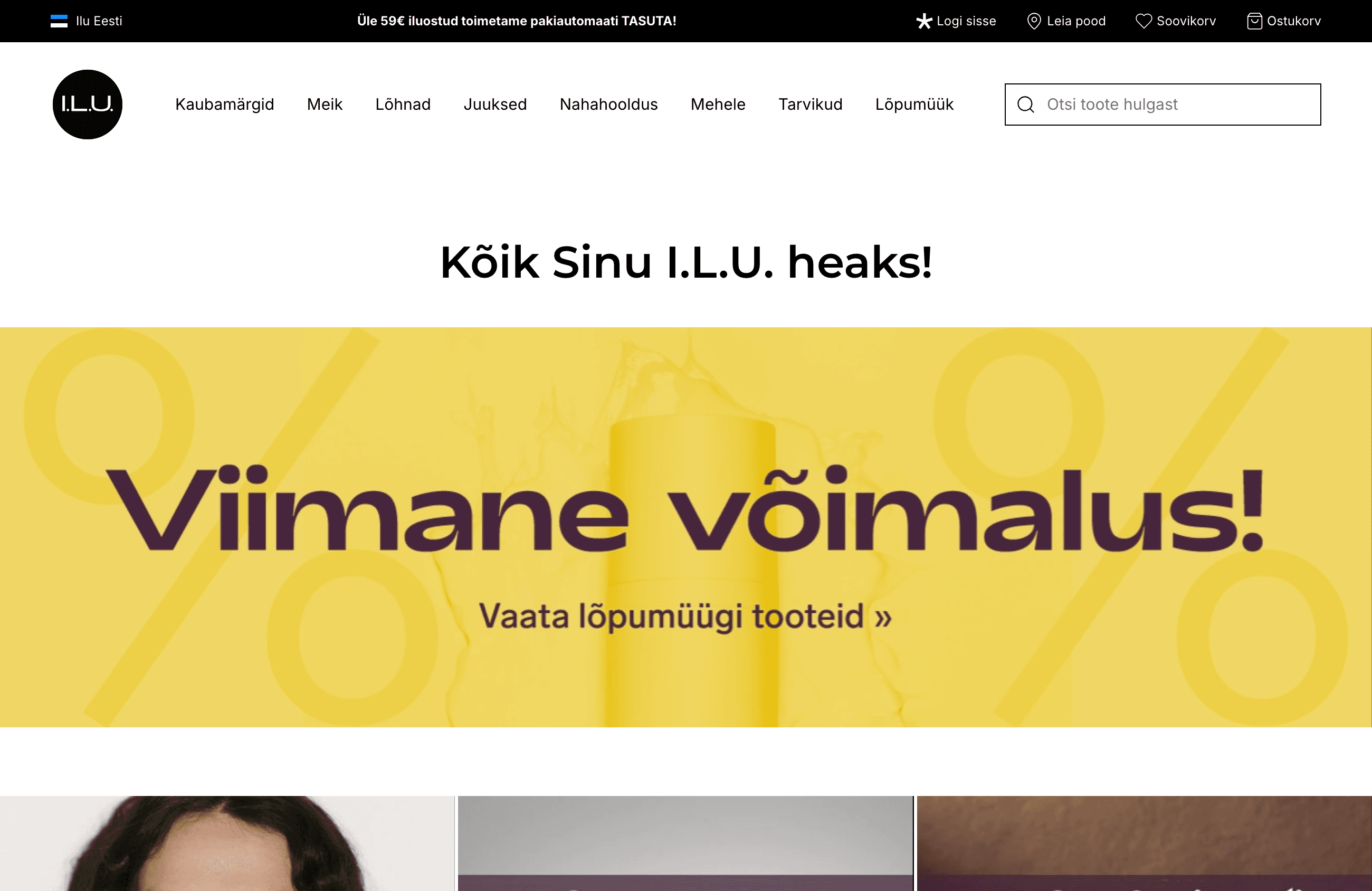 ILUILU's online store ran on an outdated platform and no longer met the expectations of modern beauty retail. Both the technology and the look needed renewing.Read more
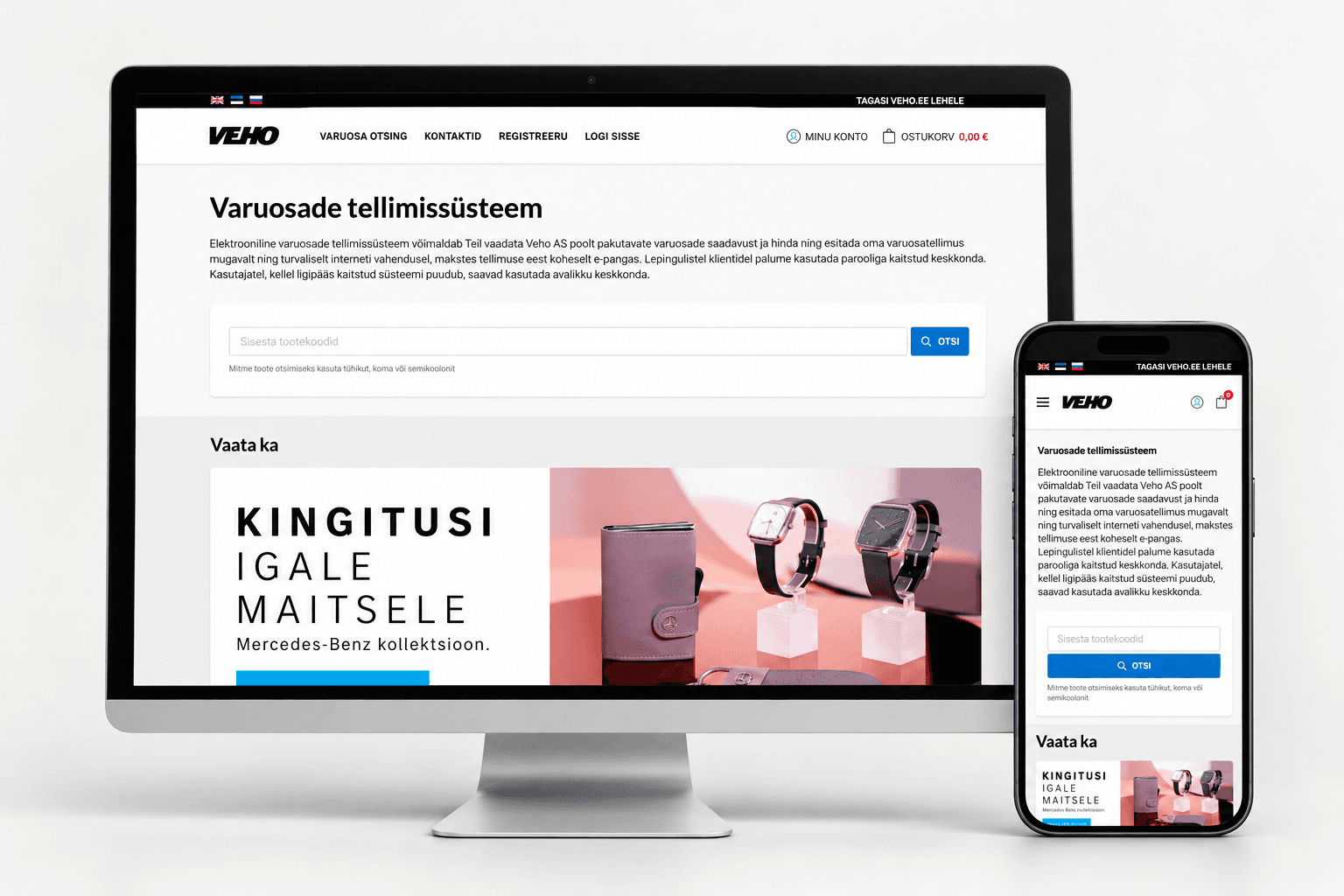 VEHO spare parts ordering systemA Magento spare parts ordering system for a Mercedes-Benz dealer: the right part by product code, real-time stock and payment by credit limit.Read more
 Äripäev: a rebuilt news site and custom CMS that is faster and costs several times less to runThe aripaev.ee frontend rebuilt from scratch, a custom CMS for the newsroom and cloud costs cut several times over.Read more
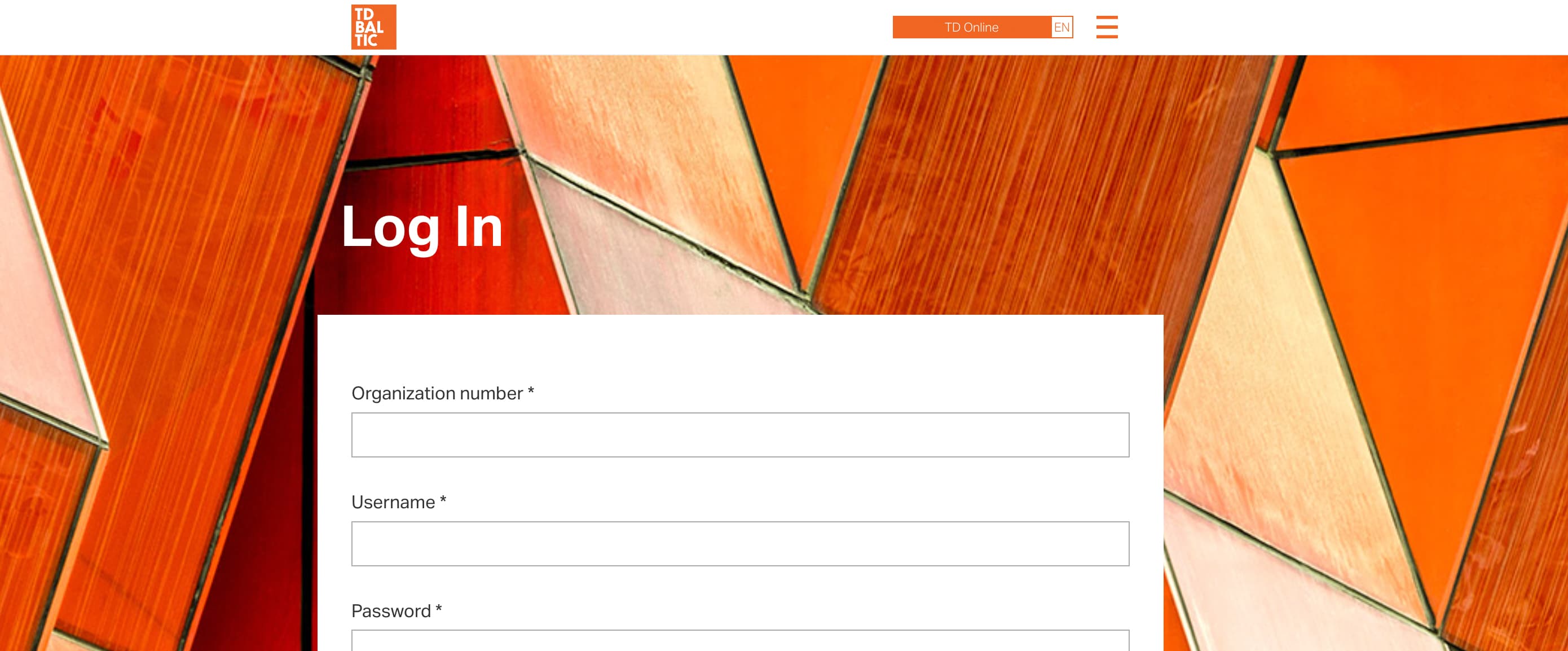 TD Baltic: a B2B portal for 2,000+ resellers running directly on the ERPA B2B portal for 2,000+ resellers in the three Baltic states, running directly on the ERP, with self-service reservations.Read more
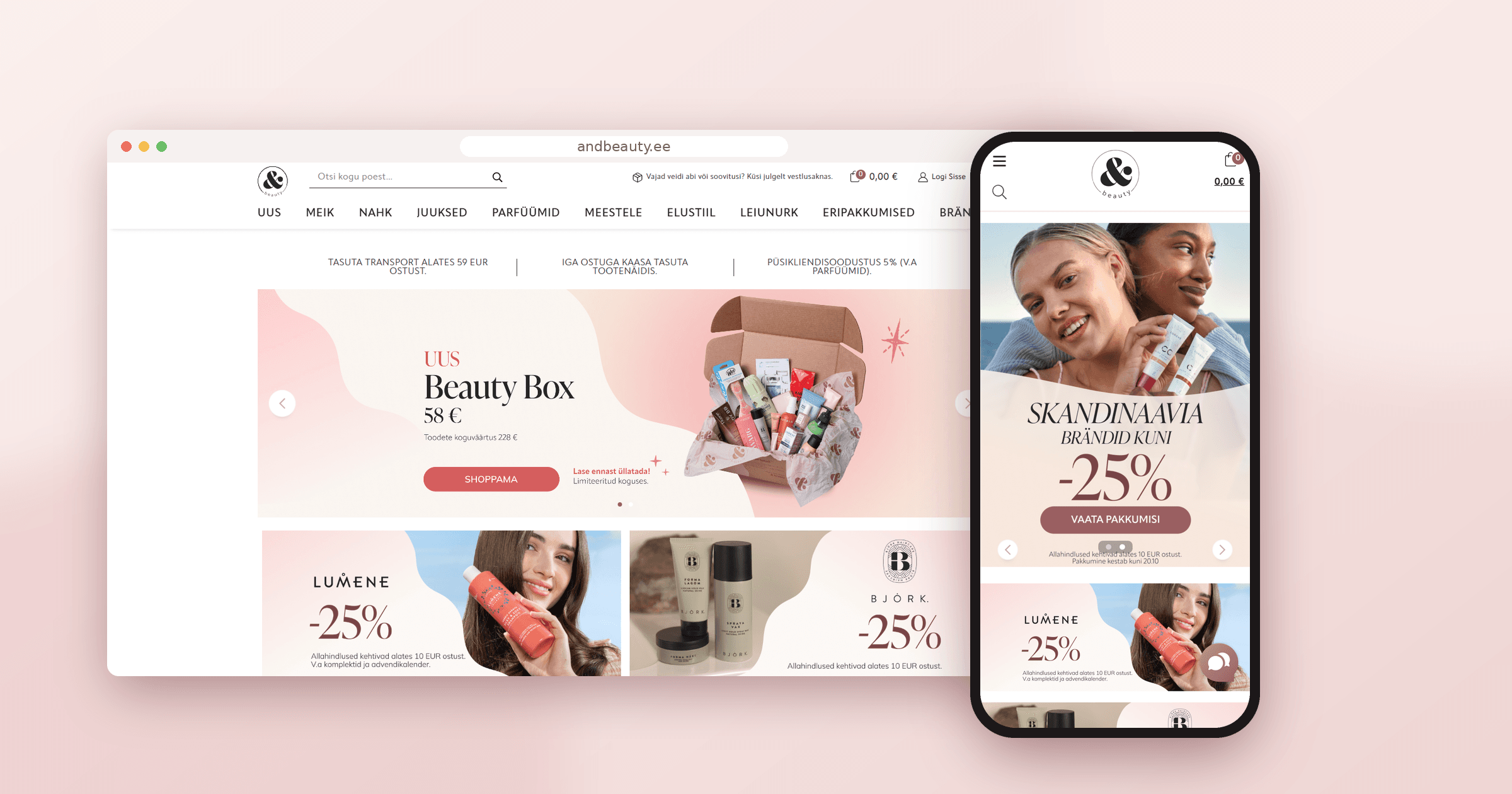 AndBeauty: a new online store where adding a product takes a minute, not tenA new three-language Magento store for a beauty department store with 300+ brands: adding a product takes a minute, not ten, and the store holds up during major campaigns.Read more
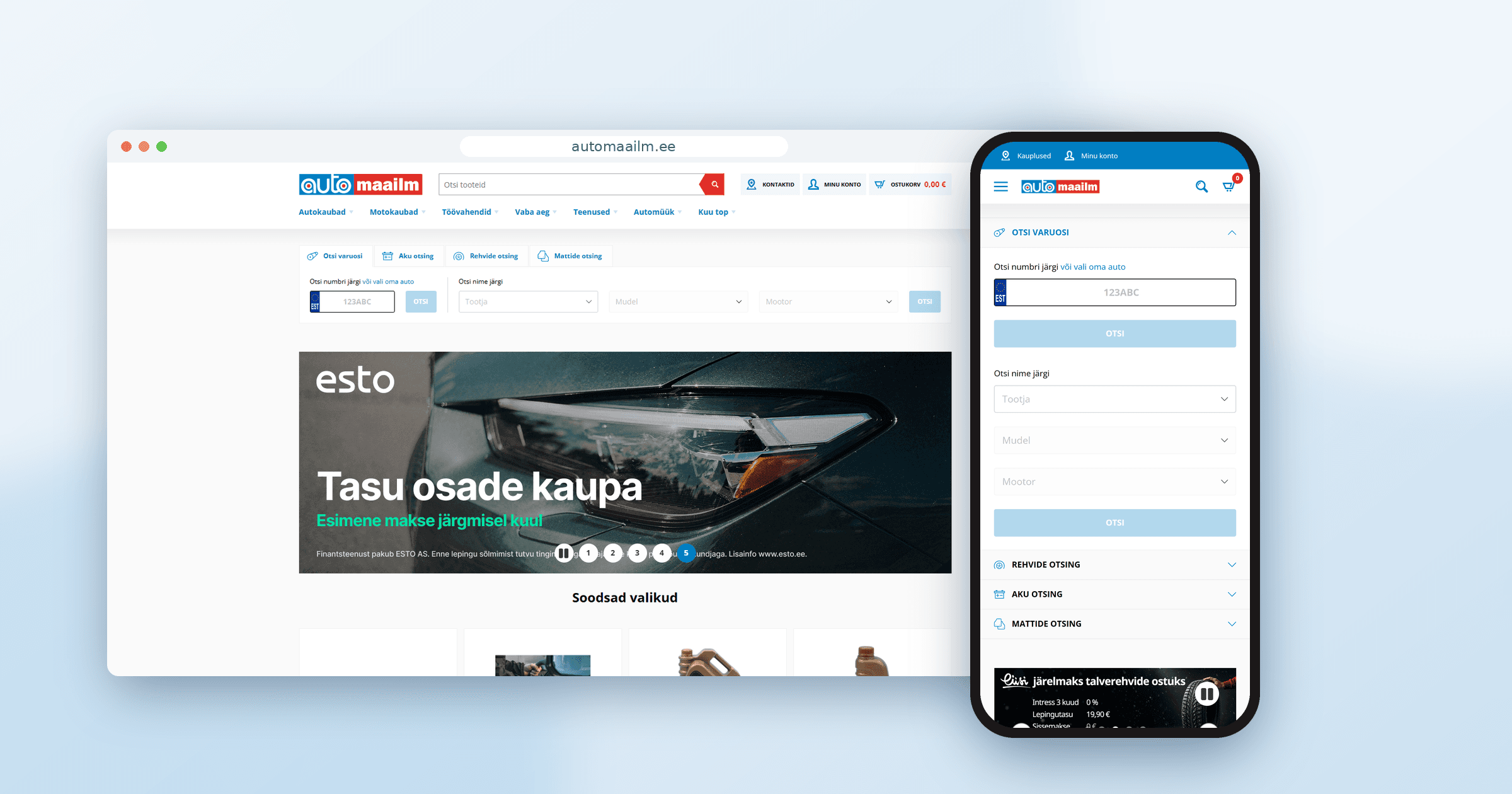 Automaailm: when speed is of the essenceA car parts store rebuilt from scratch on Magento 2 and React: search, product lists and product pages are now much faster than before.Read more
 iDeal: a headless online store for the largest Apple Premium Reseller in the Baltics and the NordicsA headless store for the largest Apple Premium Reseller in the Baltics and the Nordics: Magento 2 and React, with new iPhone launches prepared ten times faster.Read more
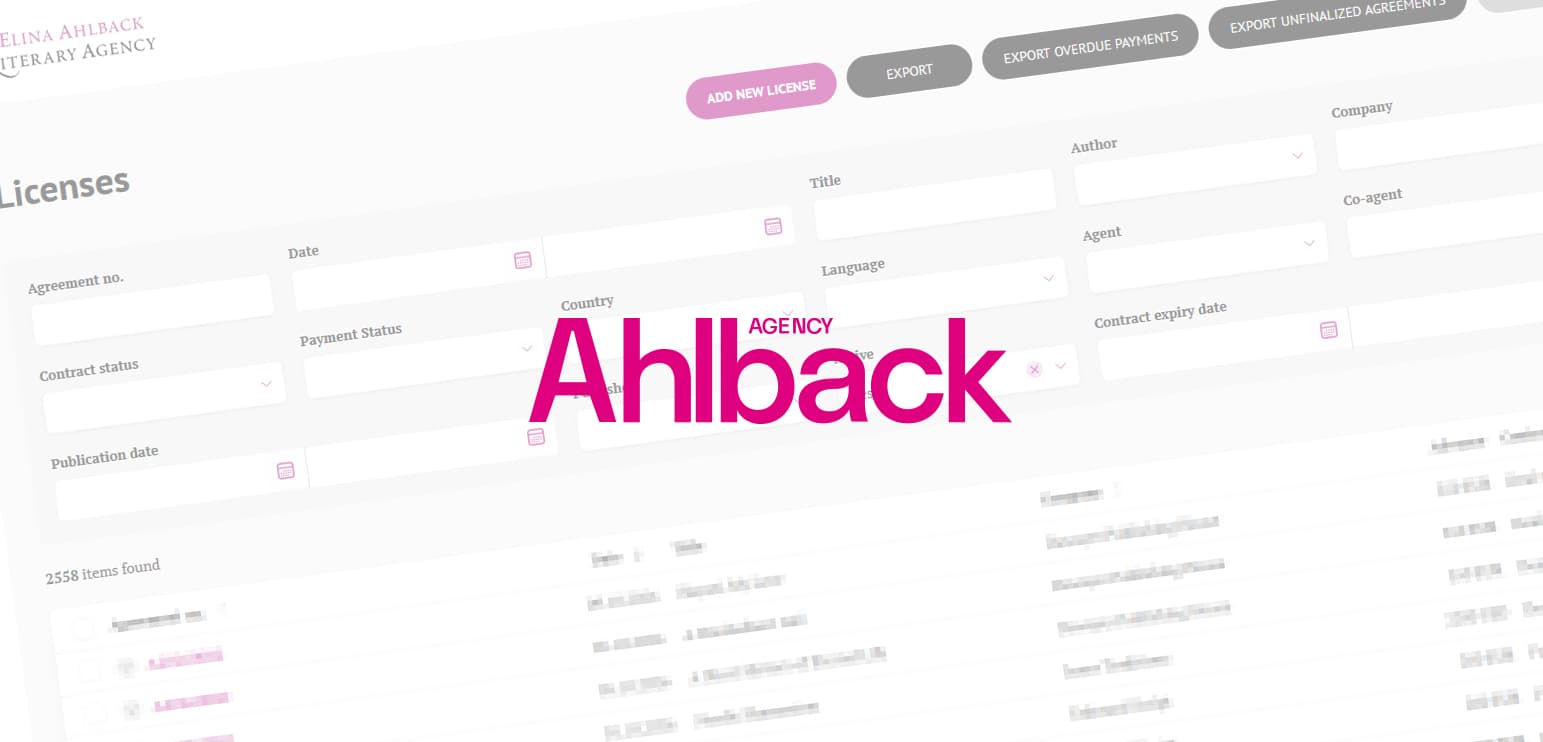 Ahlbäck Agency: a CRM for publishing rights that also powers the public websiteA CRM for books and publishing rights that also feeds the agency’s public website through an API.Read more
You communicate directly with the people who build your solution, not intermediaries.
Which systems, which data, which direction and how fast the information needs to flow.
Data model, flow patterns, formats, failure handling and monitoring plan.
Building the integration with retry logic, logging and validation.
Normal operation, failure scenarios, load testing and data validation.
Launch, alert setup and monitoring through the first days.
Tracking API changes, version updates and adding new flows.
Yes. We have connected legacy systems via SOAP, XML files, SFTP and direct database queries. If a system has no interface, we build a middleware layer that talks to both the old and the new system.
Our integrations use retry logic and message queues. If the target system doesn’t respond, data is held and retried automatically. A dead-letter queue catches records that couldn’t be delivered, and alerts notify your team.
A simple one-to-one integration (e.g. a payment provider) takes days to a couple of weeks. A more complex project with multiple systems and high data volumes may take 1–3 months. We provide an accurate estimate after mapping.
We set up monitoring and alerts for each data flow. A dashboard shows when data last moved, how many records were transferred and whether there are errors. Your team gets an automatic notification on failure.
No. We build integrations as idempotent: sending the same message twice does not create duplicate data. This is especially important for payments and orders.
Yes. We start with an audit: review the logic, failure handling and logging, then propose fixes. Often adding retry logic and monitoring is enough to turn an unreliable integration into a dependable one.
We have your back when it comes to web development, giving you the freedom to focus on building and growing your company.