We find mistakes before development
In the design we make a change in hours; in finished code it takes weeks. User tests show us the weak spots while fixing them is still cheap.

With a visual prototype you can see and test usability before we write a single line of code. Prototyping takes a little time at the start, but it speeds up development itself and helps reduce costly rework.
We prototype every project, so you see the whole workflow and the users' decision logic already in the design.
A prototype is a clickable model of the solution. With it, we try out the user journeys together with you before any money goes into development. For you, that means three things.
In the design we make a change in hours; in finished code it takes weeks. User tests show us the weak spots while fixing them is still cheap.
You, our designers and our developers see the same picture. We make decisions on the prototype, not by interpreting a long requirements document.
When every view and user journey has been thought through, we can estimate the development scope more accurately and the budget is more predictable.
We listen to your goals: who the users are, what frustrates them, which decisions are critical. This usually takes 2–3 days.
We map out the workflows, either already designed or in a plain functional layout. The goal is to pin down what the user needs at each point.
We test the wireframe with 5–8 people and check accessibility at the same time: contrast, keyboard navigation and form logic. If the users reach their goal, we move on to design. If not, we fix it first.
If you want changes, we don't redo the analysis. We make the changes quickly in Figma, test again and document only the parts that changed.
We write down how the application behaves, every possible user journey and how we tell the user about errors. Our developers use it as their working instructions.
Tools we use:
The result of prototyping is not just a picture. You get the materials development can start from straight away.
The timeline depends on how many workflows and user roles the solution has. The times below are approximate; we give an exact estimate after the kick-off meeting.
| Feature | Small project | Medium project | Large project |
|---|---|---|---|
| For example | a landing page or a single workflow | an online store or a customer portal | a B2B portal or an information system |
| Client interviews | 1–2 days | 2–3 days | 1 week |
| Wireframe and workflow | 3–5 days | 1–2 weeks | 3–4 weeks |
| User testing and iteration | 2–3 days, one round | 1 week, 1–2 rounds | 2–3 weeks, several rounds |
| Documenting the analysis | 1–2 days | 3–5 days | 1–2 weeks |
| Total | about 2 weeks | about 3–5 weeks | about 7–10 weeks |
We also try out new functionality for a live solution as a prototype before development. We start by mapping the existing solution and its user journeys, so the new part fits logically into what already works.
The prototype helps us decide together what to change and what to keep, and shows our developers exactly which existing views the change touches.
If you already have a brand book, a design system or a finished design, we don't create the design from scratch. We build the prototype on your existing components and styles, so it looks like the final product from the start.
That way we reach user testing sooner, and the time goes into thinking through workflows and user logic instead of deciding on colours and buttons.
We map the business processes and requirements before we start designing the solution.
We help decide what to build first and how the product grows from there.
We design user journeys that are clear and easy to use.
A solution everyone can use, assistive technology included, in line with WCAG and the EAA.
We have extensive experience in developing IT software and e-commerce solutions for businesses, spanning from the financial sector to insurance and pharmaceutical industries. We serve as a long-term partner for both large corporations and rapidly growing startups.
 LHVWe had a unique opportunity to build a business-critical application for LHV Kindlustus to help their business grow.Read more
 Äripäev: a rebuilt news site and custom CMS that is faster and costs several times less to runThe aripaev.ee frontend rebuilt from scratch, a custom CMS for the newsroom and cloud costs cut several times over.Read more
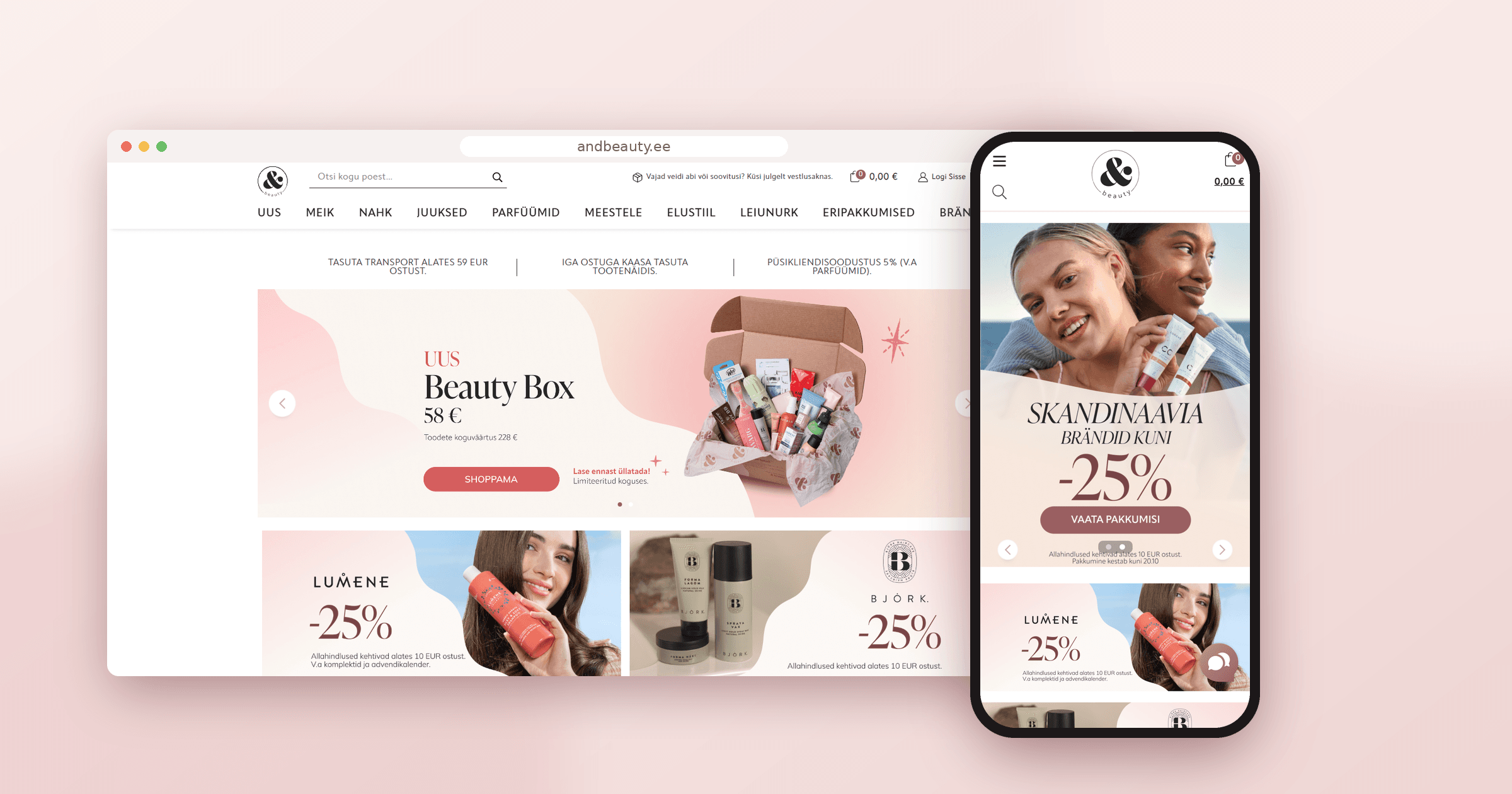 AndBeauty: a new online store where adding a product takes a minute, not tenA new three-language Magento store for a beauty department store with 300+ brands: adding a product takes a minute, not ten, and the store holds up during major campaigns.Read more
 iDeal: a headless online store for the largest Apple Premium Reseller in the Baltics and the NordicsA headless store for the largest Apple Premium Reseller in the Baltics and the Nordics: Magento 2 and React, with new iPhone launches prepared ten times faster.Read more
 Leading Quality AssuranceWe helped move a 20-year-old system to modern technology that needs less maintenance, is more secure and more configurable, and doesn’t require developer involvement for setup.Read more
 Coursy: a training platform that knows who needs which courseA training platform that automatically assigns employees to the right courses by role and department.Read more
 Luminor BankOur team is working on various mobile and web projects, including a new online banking solution.Read more
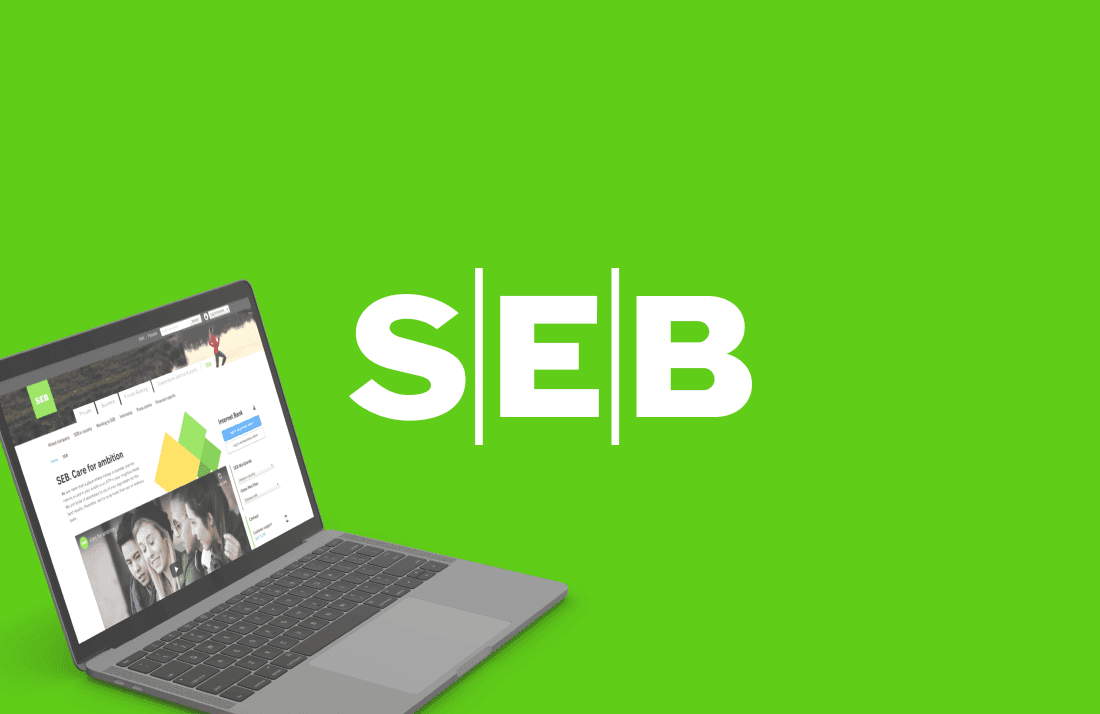 SEB PankIn addition to designing and coding the user interface, we carried out extensive workflow optimisation and website usability testing. Global Finance named the final solution the best digital bank in Estonia.Read more
The price depends on the size of the solution: how many workflows and user roles it has and how many test rounds are needed. A small project's prototype takes about two weeks, a larger one several weeks. We give an exact estimate after the kick-off meeting.
Yes. We hand over the prototype, the user test summary and the analysis document. The exact terms are agreed in the contract.
Yes. We write the analysis document so that another development team can work from it too.
A wireframe is a schematic of the page: what goes where and what happens after a click, without colours or images. A prototype is a clickable model you can walk through a user journey with. The design is the final look. Our prototypes can be simple schematics or already designed, depending on what needs testing.
Ready for development built on a thoroughly tested foundation? Write to us, and we'll talk about what prototyping could bring to your project.